
Fire incidents can occur in office buildings, factories, warehouses, or business premises, potentially causing damage to life, property, and business operations. Installing fire protection equipment is therefore a vital part of systematically detecting, alerting, and controlling such incidents.
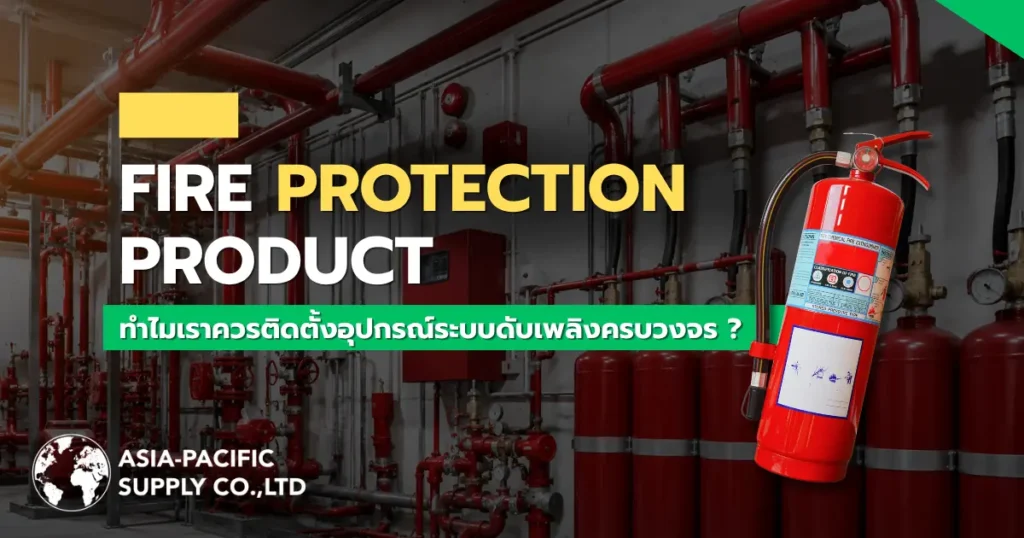
However, effective fire protection is not just about having a fire extinguisher; it should consist of various types of equipment working together, from detection to fire control and evacuation support.
What is a Fire Protection Product?
Fire Protection Products are products and equipment used for preventing, detecting, alerting, and responding to fire incidents. Each type of fire protection equipment has a different function, such as detecting smoke, detecting heat, alerting building occupants, or helping to control the fire to prevent it from spreading.
When setting up a fire protection system, you should consider how various devices will work together, designing the system based on the building type, usage characteristics, and the risk level of each area.
What are the types of fire protection equipment?
A fire protection system consists of several types of equipment that can be selected to suit the area. Common essential equipment includes:
– Smoke Detector
Smoke detectors are used to detect smoke caused by combustion. When an abnormality is found, they send a signal to the alarm system to help ensure a faster awareness and response to the situation.
– Heat Detector
Heat detectors function by detecting temperature levels or changes. They are suitable for certain areas with dust, steam, or environments that may not be suitable for smoke detectors.
– Fire Alarm System
Fire alarms alert building occupants when an incident occurs through sound or light signals, allowing people within the area to become aware of the situation and begin evacuating quickly.
– Fire Extinguisher
Fire extinguishers are basic equipment for controlling fires in their initial stages. The type of fire extinguisher should be chosen to match the risk characteristics and potential fuel sources in each area.
– Fire Sprinkler System
A fire sprinkler is an automatic fire control system. When the sprinkler heads in an area reach a specified heat level, they activate and release water to help control the fire and prevent it from spreading.
– Emergency Light and Exit Signs
Emergency lights and exit signs help building occupants see evacuation routes, especially during power outages or when visibility within the area is reduced due to fire.
Why should you install an integrated fire protection system?
Having fire protection equipment that works together properly increases the efficiency of fire response. An incident involves more than just extinguishing the fire; it covers detection, notification, fire control, and occupant evacuation.
- Faster detection: Smoke detectors and heat detectors help detect abnormalities in the early stages.
- Timely notification: Fire alarms help people inside the building become aware of the situation and prepare for evacuation.
- Controls spreading: Fire extinguishers and fire sprinklers support fire control during the initial stages.
- Increases evacuation safety: Emergency lights and exit signs help guide people to safe areas.
- Reduces business impact: A rapid response reduces risks to personnel, buildings, machinery, products, and assets.
Therefore, installing only one type of equipment may not be sufficient; the overall system should be considered to suit the characteristics and risks of the area.
How to choose the right fire protection equipment?
Choosing fire protection equipment should start with a site survey and risk assessment, as offices, factories, and warehouses may require different systems. Considerations should include building type, area size, number of occupants, materials or machinery inside the building, fire risk points, and evacuation routes.
Additionally, equipment should be selected that complies with relevant standards and regulations, with a plan for regular inspection and maintenance to ensure the equipment is ready for use in an emergency.
Good fire protection must be installed as a system, not just individual devices.
An integrated fire protection system covers fire response from detection, notification, and fire control to evacuation, which increases personnel safety and reduces risk to property within the building.
If you need to install a high-quality fire protection system suitable for your building environment, you can contact the expert team from Asia Pacific Supply & Engineering. With over 29 years of experience, we are ready to provide consultation and offer suitable products that meet all industrial needs.